Let’s Challenge Gender Norms in a New Way
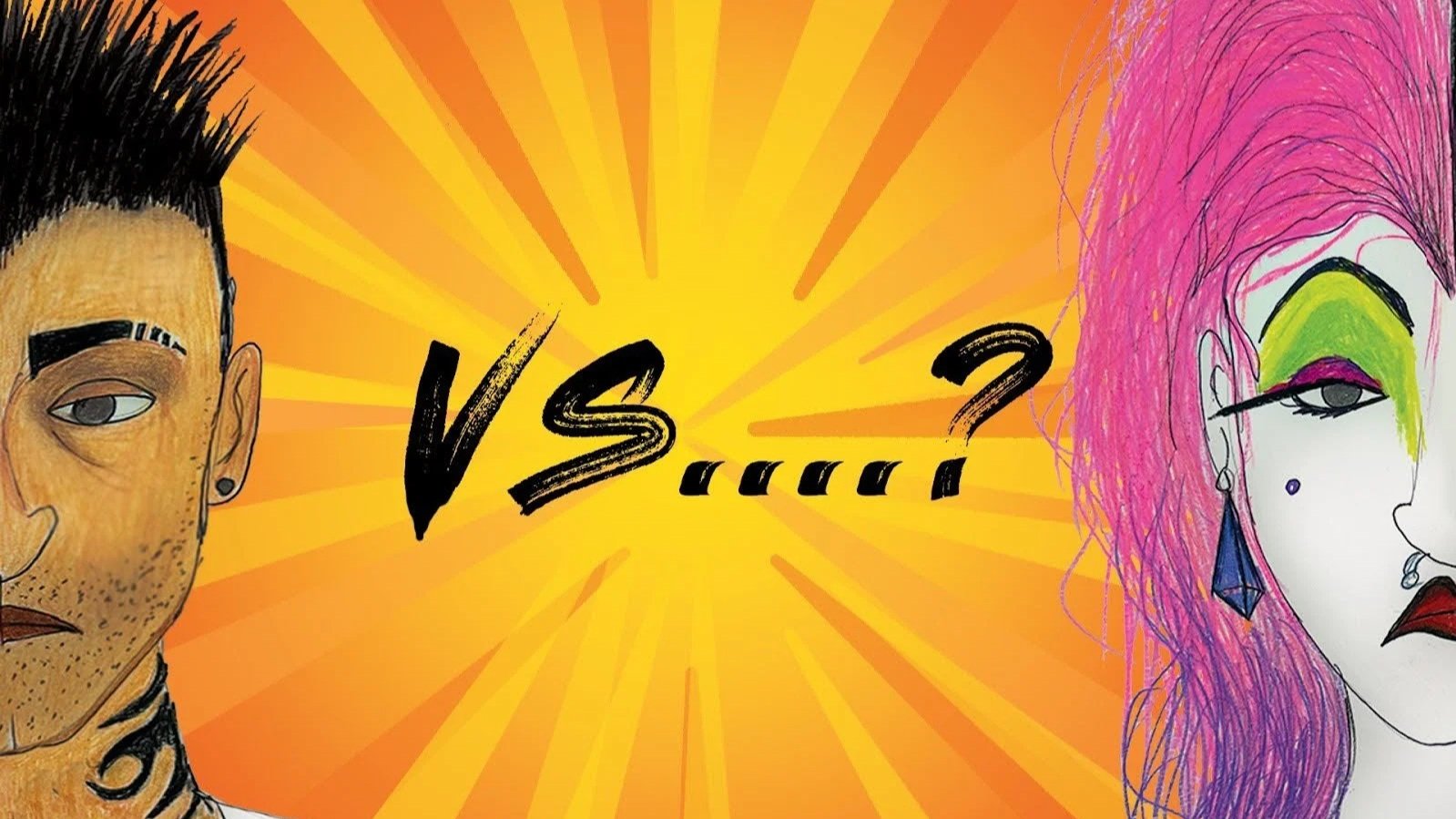
Our biggest culture war debates lately have been raging over transgender issues, including gender identity and gender norms. One side says that gender is just a social construct with purely subjective expressions, while another says this is the nihilistic death of traditional masculinity and femininity. Some say gender norms are oppressive, while others say that’s just reality and people need to deal with it.
Either way the debate rages, is there a line between proper “masculine” or “feminine” gender expression? Or should there even be a line?
You may recall when pop singer Harry Styles posed in a decidedly frilly dress on the cover of Vogue:
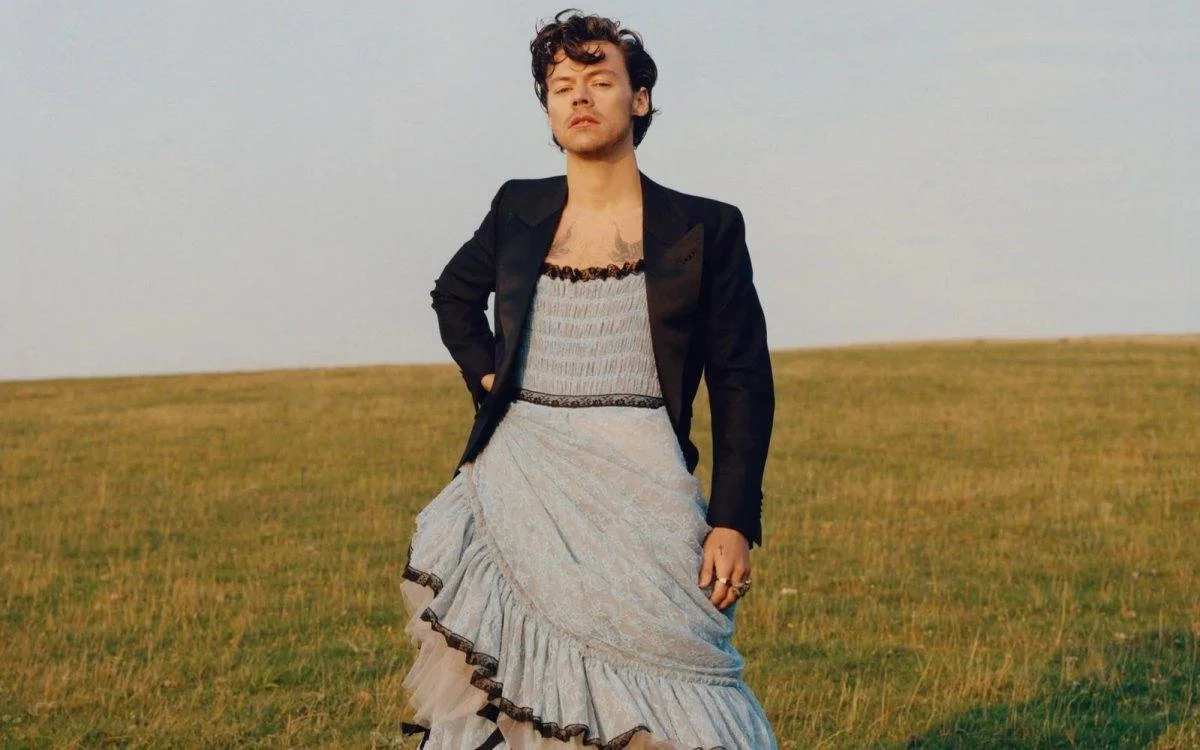
Naturally what followed was a dignified, respectful dialogue between differing opinions and — haha, no, of course not. People blew their fuses.
One side called the Harry Styles photo “sTuNnInG aNd BrAvE,” while the other declared, “tHiS iS a vIcIOUs AtTaCk oN mAsCuLiNiTy!!!1!” Crazy one-sided debates erupted while not so blatantly being tied to partisan politics on both sides.
So, what did I think about the Harry Styles photo? When I first saw it, I felt nothing. I didn’t find it intellectually or creatively challenging, or also that it was worth getting upset about. I just found it a boring idea with thinly veiled political implications.
Believe it or not, I’m actually all for reexamining and challenging gender norms. I just think most attempts to do so these days are poor, shallow, boring – and worst of all, uncreative.
Before I go on, let me say my goal here is not to dive into the theological or potentially sinful nature of cross-dressing or gender-bending. Many other resources exist on this subject for the more hardcore theological types.
It’s essentially historical fact that what’s considered “masculine” or “feminine” does indeed change over time, with additional standards differing from culture to culture.
An often cited example is that in Victorian times, pink was considered a masculine color while blue was considered feminine.
Kilts worn by men in Scottish culture serve the same function as women’s dresses in American culture today.
The frilly, colorful silk clothing and powdered wigs worn by America’s founding fathers look rather flamboyant, at best, by today's standards.
I’ve already harped endlessly about how all men once shared deep, intimate relationships full of physical touch with one another as the masculine norm, but now this sort of closeness is considered “feminine” behavior, reserved strictly for women or gay men.
I find these standards to be regressive and even harmful for men. It’s ironic that we live in a supposedly sexually liberated society, but in many ways we are more prudish than the Victorians.
Either way, it can be easy to look at any present-day cultural norm as something that’s “always been that way,” even when that norm might actually be far more modern than we think. This is what happens when we look at current events without taking off our modern goggles, or without considering nuance or historic precedent.
This oversimplified logic — “that’s just the way men and women are” — can be harmful and squelch individuality.
At the same time, though, it seems like many people’s idea for challenging gender norms is simply by reversing them. Instead of a woman in a frilly dress, let’s put a man in a frilly dress! Or let’s have a man wearing 1950s style female makeup and lipstick. A man in high-heeled shoes? Most unorthodox!
I find these challenges to gender norms shallow and surface-level, uncreative and lacking in substance. I also detect a cynical undercurrent, as if the primary message is: “This ought to piss off those small-minded conservatives!”
It’s why I’ve never gotten the appeal of drag shows. If anything, this might ironically reinforce gender stereotypes, only projected onto the other sex. Throughout the controversy of “drag queen story hour,” many folks kept posting this meme:
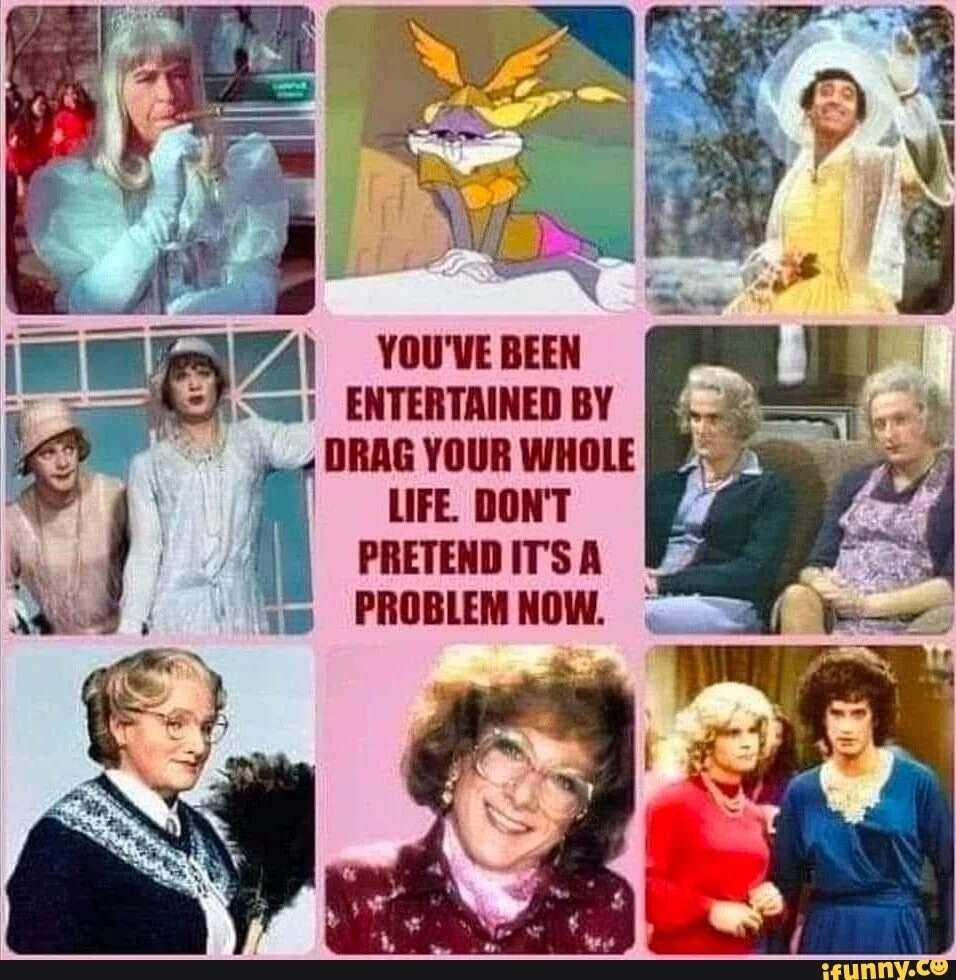
What this meme fails to note, however, are the backstories involved with most of these examples. Robin Williams’s character went undercover as “Mrs. Doubtfire” to be closer to his kids, and hijinks ensued. Dustin Hoffman’s character became “Tootsie” to get a part on a TV show since he couldn’t get hired anywhere else. Bugs Bunny dressed as a woman to outsmart and escape Elmer Fudd, and so on.
Want to challenge the idea that men don’t wear makeup? Okay. Why not come up with a unique makeup design that could accentuate a man’s masculinity? Don’t just give him that same 1950s feminine blue eyeshadow with thinly arched eyebrows. I’m not necessarily advocating that men should wear makeup, but this is just an example.
Another good example I see of challenging gender norms is from these acrobatic dancing characters called the “Red Men” (because of the red dresses they wear) from a now defunct Las Vegas show called “Le Reve.”
Yes, these are also men wearing dresses like Harry Styles, but their dresses aren’t the same frilly sort. They have more the look of Eastern skirts, the way they wrap around the midsection. They’re also torn and ragged, so when the Red Men flip and spin, their dresses flail in a way that looks like fire. It’s a masculine “spin” on something stereotypically feminine, beyond just being cool-looking.
Now, mind you, I'm also not advocating for men dressing like this in pubic. This is just a visual illustration of how I think the thought process for properly challenging gender norms should go.
I give these examples not to argue about gender expression being merely a matter of fashion or exterior appearances, but just that norms in general can impact how we interact with each other.
On one extreme, harsh and rigid gender norms can not only be alienating for some individuals within the gender but also destructive to the gender at large. The stigmatization against men being able to freely enjoy vulnerable, intimate friendships with other men has led to a "men's loneliness crisis," which I think ties into the suicide rate being about 80% men and 20% women. That’s insane.
Yes, we should reexamine and challenge gender norms, but simply reversing them only creates an opposite extreme. This does more harm than good, and it ironically reinforces gender stereotypes. A stereotype is still a stereotype, even if it's projected onto the opposite end of the spectrum.
Does a white guy wearing a stereotypical Mexican sombrero make the sombrero any less stereotypically Mexican?
I believe men and women are inherently different, and that is a good thing. I believe there is a line that separates us — a line which is perfectly fine to debate, rather than treat as a brick wall. However, I also don’t want to live in a culture full of androgynous things with no lines. After all, don’t we value diversity?
Unlike what some activists think, there's never going to be a "post-gender" society. We’ll always have gender norms, but we've gotta find that substantive middle ground: figuring out what works and what doesn't, rediscovering what’s worked in the past that we've lost, and creating something new and better.
How do you feel about gender norms and stereotypes? Where do you fit into “masculinity” or “femininity” in today’s culture?